Why That Scuffed Mahogany Table Deserves Your Forty Quid
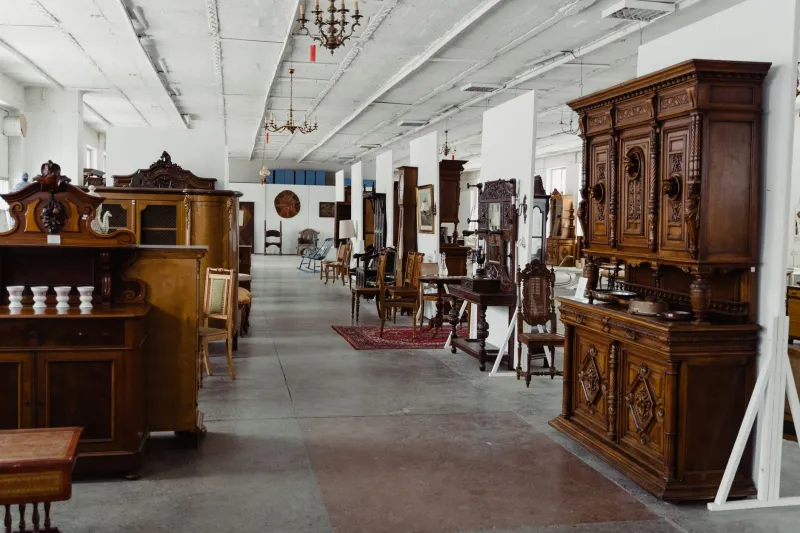
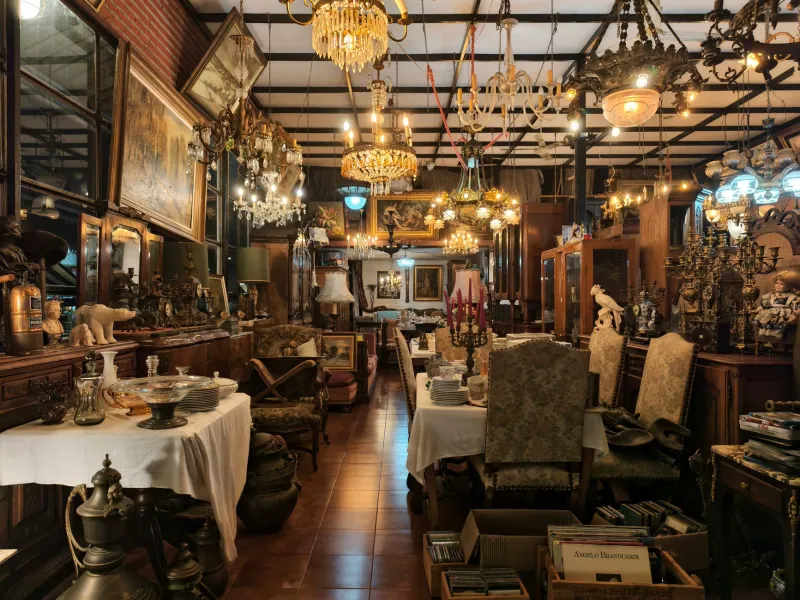
Every few months, someone declares brown furniture dead. The obituary usually arrives with a photograph of a monstrous Victorian sideboard and a sigh about nobody wanting dark wood any more. And it is true that the top of the market has come off. The twelve-seat mahogany dining suite that would have cleared four figures back in the 1990s can now shuffle through a provincial saleroom for £150 — and quite often fails to sell at all.
But dead is the wrong word. Soft is the right one. And a soft market is not a tragedy for everybody in the room; it is an opening for anyone with a van, an old blanket and the willingness to look past a few scratches.
The top end fell, not the whole tree
What has actually collapsed is the grand, the gloomy and the enormous. Longcase clocks, linen presses, bookcases the size of a bus shelter — pieces that demand a particular sort of house and a particular sort of ceiling. The demand that has gone is mostly the demand for status furniture, the stuff bought to impress a dinner party that nobody hosts any more.
What has not gone is the appetite for useful furniture. Small, well-proportioned, hand-cut things that still do a job in a modern flat. A gateleg table that seats four and folds to the width of a radiator is not a status object. It is a piece of engineering, and right now it costs about the same as a takeaway for four.
Supply does the rest. House clearances keep producing the stuff, and much of it lands in sales where the auctioneer simply wants the room cleared by five o'clock. Sit through a Tuesday sale in a market town in 2026 and you will watch box lots of mahogany go through at £20–£60 because the room is packed with dealers chasing mid-century and nobody has looked twice at lot 214.
Seven lots worth setting an alarm for
All of these turn up regularly for under £100, and often well under.
1. The gateleg or drop-leaf table. The classic rescue. Check the rule joint — the curved knuckle where the leaf meets the top — for splintering, and open both leaves to see whether they sag. Loose hinges are nothing; a leaf that has warped into a banana is a different conversation. Legs should sit flat on the floor with all four leaves down.
2. The Victorian chest of drawers. Pull every drawer right out. Runners wear, dust boards split, and a drawer that sticks in November may be perfectly fine in July — humidity, not malice. Replaced handles are cheap and forgivable; replaced feet usually mean the originals rotted off in a damp cottage.
3. The nursing chair. Low, upholstered, usually walnut or mahogany. Buy the frame, never the fabric. Rock the chair gently with your hands on the arms and listen for a rattle at the seat rail. A re-glue is £30–£60; a full re-upholster is £150–£300, so pay accordingly.
4. The oak coffer. Six boards and a lid, and a thousand years of design that never quite went away. Check the lid for cupping, the hinges for splitting at the screw holes, and the back boards — often the most honest part of the piece. A little historic worm is normal in oak. Fresh dust is not.
5. A pair of balloon-back chairs. Matched pairs are far more useful than singles. Push down on each seat corner; a loose leg is a clamp-and-glue afternoon, a snapped back leg is a proper joiner's job. Look for a stamped maker's name or a paper label under the seat rail — it costs nothing and adds a story.
6. The Sutherland table. Tiny, drop-leaf, four slender legs and almost entirely impractical. Also utterly charming, and the perfect hall piece for a narrow terrace. Check that the legs swing out fully and that the leaves meet without a fight.
7. The davenport. A sloping-lidded desk the size of a bedside table, with drawers down one side. Look inside: the original leather or baize writing surface is a bonus, and a missing interior drawer is a bargaining chip. Watch the flap mechanism — it should stay up without collapsing onto your knees.
What repairs actually cost
Rough figures from a decent local restorer, and worth memorising before you bid:
- Re-gluing a loose joint: £30–£60, or the price of hide glue and clamps if you are brave.
- French polishing a small table top: £80–£150.
- Re-webbing and re-upholstering a nursing chair seat: £150–£300 depending on fabric.
- A DIY woodworm kit: £25–£60, enough for a whole chest if you are thorough.
- Replacement brassware: £10–£30 a pair for period-style, considerably more for genuine old stock.
- New baize or leather for a davenport: £15–£40.
The rule is simple. If the repair costs more than a decent modern equivalent, only do it for love. If it costs less, you are essentially buying a hand-made object at a fraction of its materials value.
When to walk away
Be sentimental about shapes, not about problems. Leave it on the shelf if you spot:
- Fresh frass — pale sawdust — under the piece, or holes with clean, sharp edges.
- A split running through a load-bearing leg or stile rather than a decorative panel.
- Veneer lifting in sheets, especially across a curved surface where it will never lie flat again.
- Feet that are soft and crumbling from old damp.
- A twisted carcase, so the drawers no longer run true however much you wax them.
- Wholesale replacement of legs, feet or a back. It can be honest work, but value it as a repaired piece and bid accordingly.
The kit that saves you money
A tape measure, because saleroom dimensions are optimistic. A torch, for the back of the carcase. Gloves you do not mind ruining. An old blanket and a friend, because a £40 table becomes a £140 table the moment you pay a man with a van. And a notebook — write down what you paid, what you spent and what you learned. Six months of that and you will know more about brown furniture than half the room.
The long view
Taste cycles. The dark wood that looks like your grandparents' front room today will look like a design statement to somebody in ten years, and the pieces that survive that cycle are always the small, sound, honest ones. Nobody is going to fight over a wardrobe the size of a wardrobe. Plenty of people will fight over a folding table that fits in a hallway.
That is the wager. Forty quid, an afternoon with a clamp and a rag of wax, and a piece of wood that was cut and jointed by hand before your street was built. Rooted in history, found at auction — and still, for now, cheaper than the flat-pack alternative.