The Eight-Pound Album That Unlocked a Family Tree: A Beginner’s Guide to Victorian Photo Provenance
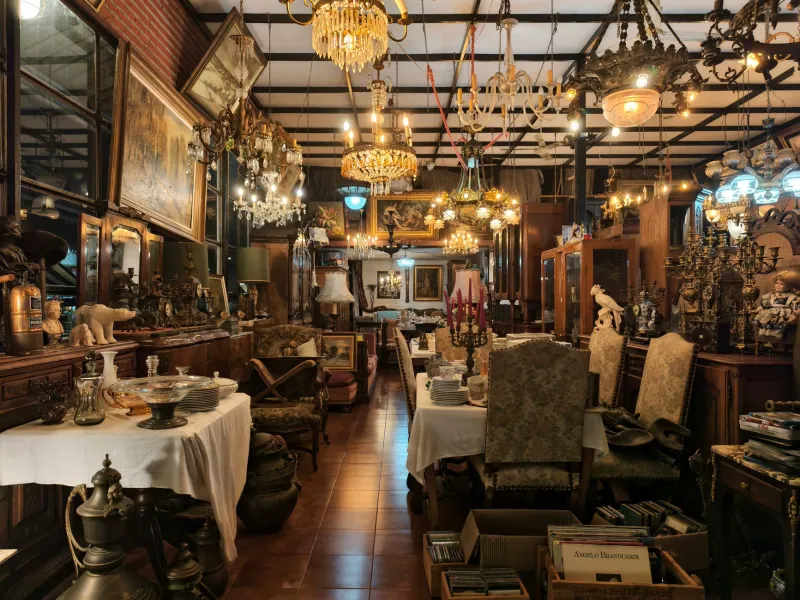
At a Tuesday sale in Suffolk this autumn, a box lot went for £8. Inside, under a nest of lace doilies and a tin of buttons, sat a small Victorian photograph album. Its spine was tired, its brass clasp had lost its snap, and one page had been cut with a penknife. It was exactly the sort of thing that ends up in the saleroom’s miscellaneous corner. It was also a family tree waiting to be read.
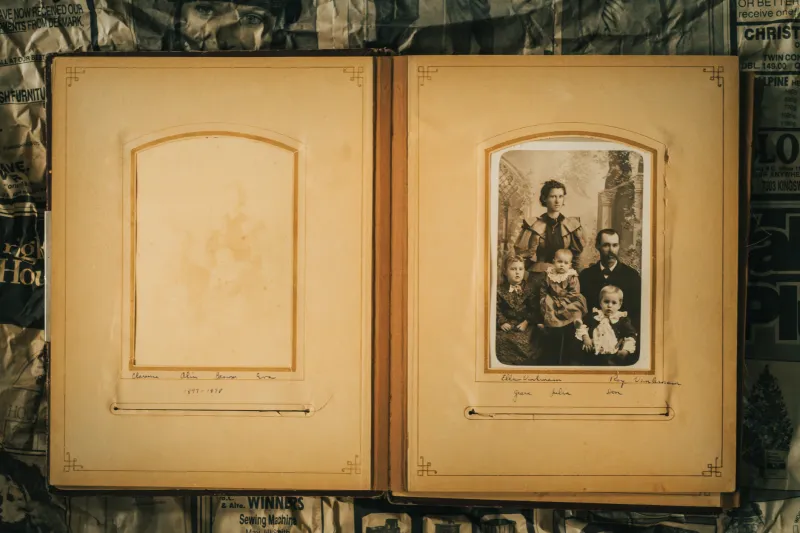
This is not a story about a hidden masterpiece. It is about a cardboard gateway. The album held 22 carte de visite photographs — the small, card-mounted portraits that Britons swapped like calling cards from the late 1850s into the 1870s. Each image was roughly 2½ by 4 inches, mounted on a stiff card, and often stamped on the back with the photographer’s name and address. The album itself was the social media of its day: a curated feed of family, friends and slightly superior acquaintances, arranged on gilt-edged pages.
Start with the object, not the faces
Before you fall down a genealogy rabbit hole, look at the album as a physical thing. A carte de visite album from the 1860s usually has thick pages with slotted corners or small windows, a padded or embossed cover, and a brass clasp. The pages often carry a gilt border. By the 1880s, albums were getting larger to take cabinet cards, which are roughly 4¼ by 6½ inches. If you see a mix of sizes, someone has been adding to the album later.
Later additions are not necessarily bad. Families updated albums as photography changed. But they matter for dating. A ballpoint pen inscription is a clear later hand. So is a photograph with a glossy resin coating, or a postcard-backed print from the early 1900s. Look at the card thickness and the colour of the page edges. Original pages often show foxing and a little grubbiness around the slots. A fresh, bright page in a tired album is a page that has been replaced.
Do not repair anything yet. Do not glue loose photographs. Do not peel back cards to read hidden messages. The album’s value — sentimental and sometimes financial — lies in its arrangement. A split album is a broken chain.
Read the backmarks like a map
The back of a carte de visite is often more informative than the front. Photographers used elaborate backmarks: name, street address, town, sometimes a royal warrant, sometimes a negative number. That address is a date clue. Photographers moved, took over rivals, and advertised in local trade directories. If a backmark says ‘late Brown’ or ‘successor to Smith’, you have a terminus post quem — a date after which the card must have been made.
UK collectors have good free or cheap tools here. Local record offices hold trade directories. The British Newspaper Archive can turn up adverts for a studio’s opening. The National Archives’ Discovery catalogue will point you to local archives. For census records, 1841 to 1921 are available through the main genealogy sites; FreeBMD and FreeCEN are useful free starting points. If the photographer was in business at 14 High Street between 1863 and 1871, and the album’s other cards cluster in the same period, you have a working date range.
A royal warrant can help, but be careful. ‘Photographer to the Queen’ was used by several studios and not always with strict accuracy. Treat it as a clue, not a certificate.
The inscription in the margin
Pencil names in the margin are the heart of the detective story. They are also the easiest thing to over-read. A name written in pencil in a Victorian hand is promising. A name written in blue biro is probably a later relative’s attempt to help — useful, but not contemporary evidence. Compare the handwriting across pages. If the same hand has labelled every image, someone sat down at one point and annotated the album. That may have been in 1875 or 1975.
Ask three questions before you chase a name. First, is there a place? A surname alone is weak; a surname plus a town is stronger. Second, is there a date or an event? ‘Emily, 1868’ is better than ‘Emily’. Third, are there linked names? A page with ‘Emily Cooper’, ‘John Cooper’ and ‘Grandma Cooper’ gives you a family constellation. One name in a margin is a doodle; a cluster is a lead.
A worked example from the £8 lot
The album I watched sell had 22 cartes de visite. Most were by a Bury St Edmunds photographer whose backmark gave a street address that appeared in a local directory only in the late 1860s. One card was inscribed in pencil: ‘Emily, 1869’. Another, in a different hand, said ‘Uncle John’. A third had no name but the same photographer’s negative number as Emily’s card. That number suggested the two were taken in the same sitting.
A census search for an Emily born in Suffolk in the 1840s threw up several possibilities. Narrowing by the photographer’s town and by the presence of a John in the same household reduced the list to one plausible family. That is not proof. It is a hypothesis. The next step would be to check the local record office for parish records, wills or school logbooks, and to contact the local family history society. The album cost £8. The research might cost nothing but time.
When is a name worth chasing?
Not every album needs a full genealogy. Use a simple triage. If the album is intact, the photographer’s address is dateable, and there are at least two linked names in period pencil, chase it. If the album is a loose pile of pretty portraits with no place and no date, enjoy it as a design object. If the only name is ‘Mary’ in biro on the inside cover, let it go.
If you do find a match, do not split the album to sell the photographs individually. Contact the county record office or a local family history society. They may know a descendant. Some auction houses will pass on a note to a buyer if you ask. There is no guarantee of a happy reunion, but the attempt is part of the object’s story.
The £8 album did not contain a lost Gainsborough. It contained something better: a paper trail. Backmarks, census entries and pencil names are branches. Follow them carefully, and a dusty lot from the saleroom can grow into a family tree.