What the Stuffing Knows: A £25 Chair and the Layers That Tell Its Story
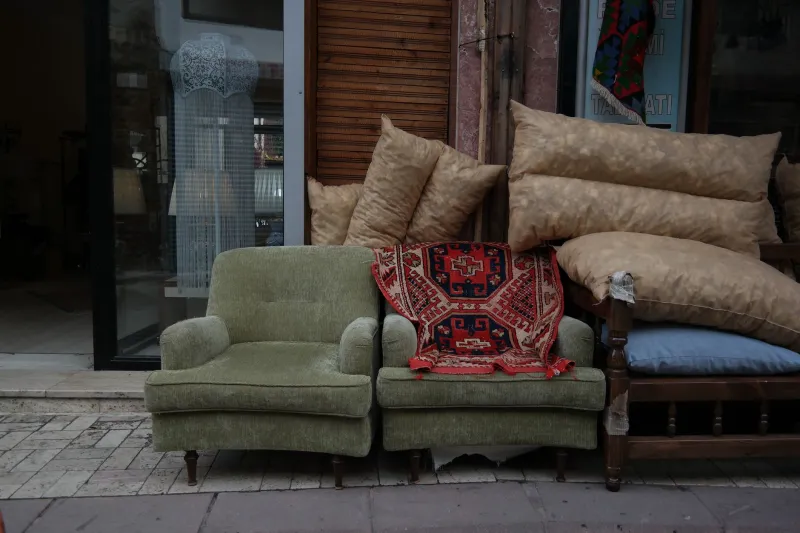
At a Thursday sale in a draughty village hall, the auctioneer called it a 'useful tub chair' and opened the bidding at £10. Two nods later it was mine for £25, buyer's premium already making a small dent in the festive budget. The seat sagged. The moquette had the tired shine of a busy hallway. What sold it was not the shape but the smell: old dust, wax and something faintly animal. That is not everyone's idea of a bargain, but it is exactly the sort of chair that makes an upholstery detective sit up.
The £25 chair that looked like a prop
The chair is a square-backed tub, probably 1920s or 1930s, with a mahogany-stained frame and a seat that has clearly been sat on by several generations. It came from a house clearance lot: three chairs, a gateleg table and a box of assorted tumblers. The other two chairs went to a dealer. Mine was the ugly one. Good. Ugly chairs are often the ones nobody has bothered to 'improve' with a staple gun and a roll of grey foam.
Before you start pulling tacks, decide why you are doing it. If you want a usable chair, the frame and joints matter most. If you want a story, the stuffing is where the gossip lives. The two aims do not always agree. A chair can be a wonderful document and a terrible place to sit.
A seat is a sandwich, not a slab
Modern furniture often hides a single block of foam under a cover. Older upholstery is a layered affair: show cover, calico or lining, wadding, hessian, stuffing, webbing, springs and frame. Each layer is a small clue. The top cover may be a later replacement. The calico underneath might be original. The hessian can carry a maker's stamp or a pencil date. The stuffing can tell you what was available and affordable when the chair was built or rebuilt.
Start at the underside. Turn the chair over and photograph the base before touching anything. Look at the webbing: black and white striped jute is a common Victorian and Edwardian material; later webbing may be synthetic. Look at the tacks. Hand-cut tacks and regular hammer marks suggest older work. Machine staples suggest a twentieth-century repair, or a very enthusiastic weekend. Neither is automatically bad, but they are dates in the chair's diary.
Horsehair, coir and the smell of an era
Horsehair was the great stuffing of the eighteenth and nineteenth centuries and was still used well into the twentieth. It is curly, springy and often dark brown or black. It smells faintly of animals and old dust, especially when damp. Coir — coconut fibre — is coarser and browner, often used in cheaper seats. Flock, which is shredded textile waste, can look like grey fluff. Foam is the giveaway of a later reupholster: convenient, cheap and usually a sign that someone has been at the chair since the 1950s.
None of these materials proves a date on its own. A Victorian frame can have a 1970s foam seat. A 1930s chair can be stuffed with horsehair left over from a previous job. What matters is the sequence. If the horsehair sits under old hessian and the foam sits on top of newer calico, you have a chair that has been rebuilt. That is not a tragedy. It is provenance of a different kind: evidence of use, repair and thrift.
Hessian, chalk and the upholsterer's handwriting
The hessian is often the most talkative layer. It may be stencilled with a firm's name, stamped with a number, or marked in pencil with initials and a date. I have seen upholsterers' names pencilled on the frame, and chalk numbers on webbing that look like a workshop job sheet. These are not always glamorous. A stencil for a provincial furniture shop is still a useful link in the chain. Photograph it before it crumbles.
Look, too, for labels on the frame: maker's plates, retailer's tickets, exhibition labels, or a simple handwritten name. They can be hidden under the seat, on the back rail, or inside the arm. Do not assume a label belongs to the chair. Check the fixing, the age of the paper and whether it matches the construction. Provenance is a jigsaw, not a lottery ticket.
Newspaper scraps and the small headlines
Newspaper is common under old upholstery. It was cheap, absorbent and useful as a pattern or lining. Sometimes it is a page from a local paper; sometimes it is a racing supplement; sometimes it is a fragment of a headline that makes you laugh out loud. The date matters because it gives you a terminus post quem: the chair cannot have been upholstered before that paper was printed. It does not tell you the chair was made that year. Papers get reused, and a 1934 scrap can sit inside a 1950s repair.
Still, the scraps are a lovely reminder that the chair was once part of a household. A piece of newspaper with a church fete notice or a sale of work is a small window into the room the chair came from. Keep it if you can, bag it, label it. Do not iron it. Do not frame it in direct sunlight. Treat it as an archive fragment, not a craft project.
Springs, knots and the grammar of handwork
If the seat has springs, look at how they are tied. Hand-tied springs are secured with twine in a pattern that distributes weight. The knots and the tension are a signature of the upholsterer's skill. Machine-made spring units are a later development and often sit in chairs from the mid-twentieth century onwards. Again, repairs confuse the picture. A hand-tied seat can be re-tied; a machine unit can be added.
If you are exploring, work from the underside and the back first. Those areas are less visible and more likely to retain original material. Do not cut through the top cover unless you have decided the chair is a study piece rather than a user. Once the cover is gone, the chair's value as a period object usually goes with it.
When to stop
Stop when you reach the frame, when you find a label or inscription, or when the dust starts making you cough. Stop if the chair is structurally sound and you want to use it. Stop if there is any sign of active woodworm, mould or damp. Stop if the chair is rare, labelled or obviously expensive. Curiosity is a fine motor, but conservation is the brake.
Wear gloves and a dust mask. Work outside or in a well-ventilated room. Do not use a domestic vacuum on fragile hessian unless you have a conservation-grade filter and a very gentle brush attachment. Take photographs at every stage. Keep the removed layers in labelled bags, even if they look like rubbish. The story is often in the rubbish.
What my £25 chair revealed
Under the seat, I found a layer of hessian with a faint pencil date — 1936 — and a scrap of local newspaper advertising a whist drive. The frame had been repaired at one joint with a later screw. The horsehair was original in the back, but the seat had been rebuilt with foam at some point in the 1970s. So the chair was not a pure period piece. It was a working chair with a history of being kept going. That felt more honest than a perfect untouched example.
Would I pay £25 again? Yes, but I would check the joints first and assume the upholstery is a research project, not a quick flip. The stuffing told me more about the chair's life than the frame ever could. It was not valuable in the saleroom sense. It was valuable in the Antiques Tree sense: rooted in history, found at auction, and full of small surprises.