The Wash Day Archive: Reading a Twelve-Pound Bundle of Old Linen
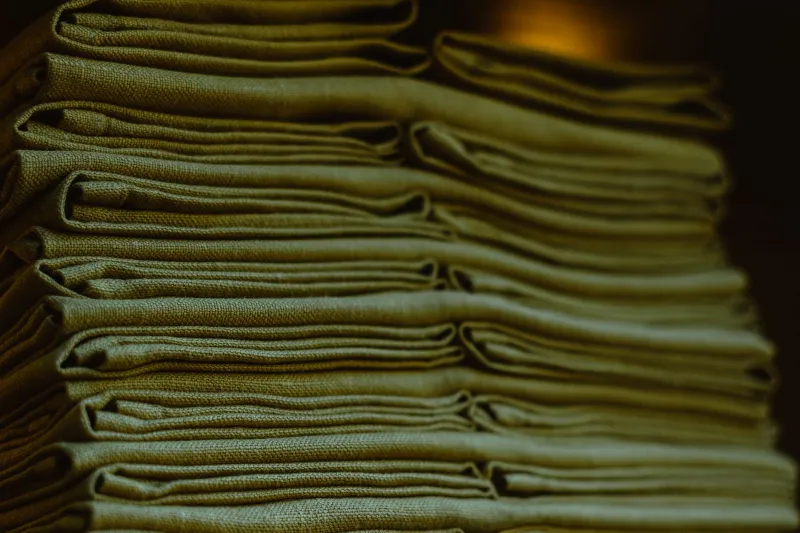
The lot is a bulging laundry bag tied with baler twine, slumped against a table leg at the back of the saleroom. The label reads 'Mixed household linen, qty'. The estimate is £12. Most bidders walk straight past it on their way to the silver. That is their loss.
A bundle like this is not glamorous. It is bulky, faintly musty, and usually stained. But it is also a compact archive of domestic life — of wash days, careful mending, and the quiet pride of a well-kept airing cupboard. If you know what to look for, a twelve-pound bag can tell you more about a household than a cabinet full of labelled china. The clues are all there, written in ink and thread.
What Is Actually in the Bag
Mixed linen lots vary wildly. You might find heavy damask tablecloths, plain cotton sheets, embroidered tea towels, hand-hemmed pillowcases, and a few odd napkins that have lost their partners. There will often be a duster or two, and something with a hole in it. The trick is to empty the bag on a clean sheet at the preview and sort quickly into three piles: keep, maybe, and rag.
Do not be put off by creases or tea stains. Old linen is robust, and many stains lift with a cold soak and a gentle wash. What matters more is the structure: the weight of the cloth, the quality of the hem, and the marks that tell you who owned it.
The Ink Never Lies (Much)
Laundry marks are the first thing to hunt for. They turn up on hems, inside seams, and in the corners of sheets. The most common are handwritten initials or names in indelible ink — sometimes black, often blue-black, occasionally red for institutional use. Early examples are usually written in a careful copperplate hand; later ones are block capitals or a stamped number. If the ink has bled into the fibres in a soft halo, it is probably older than a crisp felt-tip line.
Then there is the blue thread. A line of blue cross-stitch — often a set of initials — was the traditional way to mark household linen before commercial laundry pens took over. It was also a common exercise for young girls learning to sew, which is why you sometimes find a whole set of sheets marked with the same slightly wobbly monogram. If the blue thread has faded to a powdery grey, the linen has seen a good few wash days.
In large houses, linen was often numbered rather than named. A stamped or embroidered number — sometimes with a letter for the room or the month — suggests a household with a system, a laundry maid, and a linen cupboard that was checked regularly. Those pieces are worth keeping, even if the cloth is worn.
Needle Tracks: Darning and Patching
A darn is not the same as a patch. A patch is a separate piece of fabric sewn over a hole. A darn is a woven repair, worked with a needle to fill the gap with a grid of threads. Look for the tell-tale basket-weave pattern on the reverse. Hand darning is usually slightly irregular, and the thread often fades at a different rate from the ground fabric. A small, neat darn in matching thread suggests a skilled hand and a household that valued its linen. A big, blobby darn in whatever thread was to hand tells a different story — but it is just as honest.
Blue mending thread on white linen is common, partly because blue was a standard colour for marking and mending. It can look striking, especially when the repair has been done with care. Do not dismiss a darned sheet: it is evidence of thrift, and thrift is often a sign of age.
The Hem Tells the Tale
Turn the piece over and look at the hem. A hand-hemmed edge is worked with a needle and thread, usually in a small running stitch or whip stitch. The stitches are slightly uneven, and the thread has a matt finish. A machine hem is uniform and tight, with a straight row of lockstitch. On older pieces, you may also see a hand-rolled hem on a fine tablecloth — a sign of quality that no factory can quite imitate.
The way the hem is turned matters too. A hand-turned hem often has a soft, slightly rounded crease, while a factory hem is pressed flat and sharp. If the hem has been let down and re-stitched, you may see a faint line of old needle holes. That is a useful dating clue: it means the piece was altered, perhaps when it was passed down or cut down from a larger cloth.
Machine stitching became common in the home from the early twentieth century, but it did not replace hand sewing overnight. A mixture of hand and machine work on the same piece is a good sign of a transitional period — and a reminder that households did not update their linen just because a new machine arrived.
The Keepers and the Rags
Not everything in a twelve-pound bundle deserves a place in your cupboard. Set aside anything with a legible laundry mark, a hand-embroidered monogram, or a blue cross-stitch initial. Heavy damask tablecloths, hand-hemmed sheets, and old linen tea towels are worth keeping even if they are worn. Look out for the dolly blue tint on older whites — a faint blue cast is a reminder of the days when laundry was rinsed with a blueing agent to make it look brighter.
Put aside the thin, machine-hemmed cotton, the nylon blends, and anything with a strong smell of mildew. Those can go to the rag pile or the textile bank. If you are unsure, wash a small piece first. Old linen can be surprisingly forgiving.
A Small History You Can Hold
The real pleasure of a bundle like this is not financial. It is the sense of a household's quiet routines — the wash day, the mending basket, the careful initials in blue thread. You are holding someone's Monday morning. For twelve pounds, that is a bargain.
So next time you see a lumpy bag of linen at the back of a saleroom, do not walk past. Untie the string, pull on the corners, and read the marks. The chances are you will find a piece worth keeping — and a story worth telling.