The Frame’s Other Story: Reading Labels, Stencils and Scuffs on the Reverse of a Modest Lot
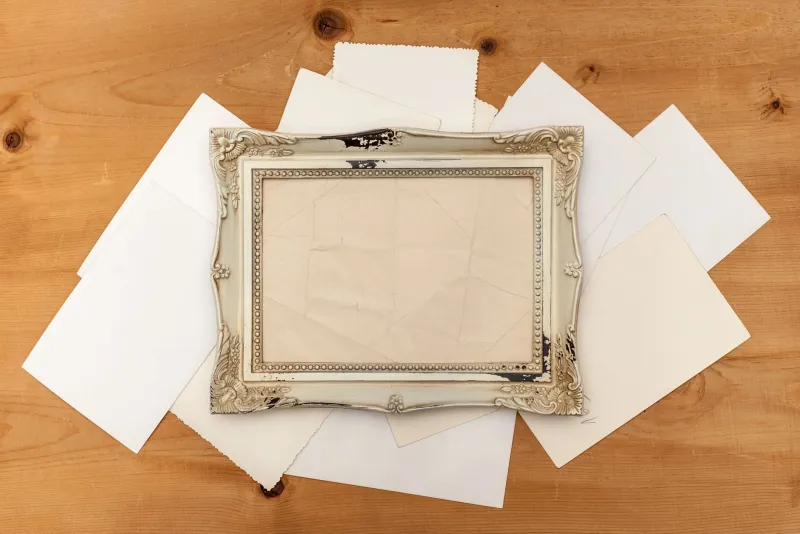
At a provincial saleroom on a grey Tuesday, the pictures are usually the easiest lots to walk past. The oils are dark, the watercolours are faded, and the estimates start at thirty quid. But if you are a hobbyist with a spare fifty and a torch on your phone, the back of a picture can be more talkative than the front. It is also where hopeful buyers most often let auction-room romance do the thinking.
Here is how to look behind the frame without convincing yourself that every pencil mark is a lost master’s signature.
Start with the frame itself
Before you read a single label, look at how the frame is made. Are the corners joined with hand-cut mitres and old nails, or with neat staples and machine-cut gaps? Is the backing board hardboard, plywood, or a sheet of brittle brown paper? Has the paper been torn and taped back down with something shiny and modern?
A frame is not the painting, and the two often have separate histories. Reframing was normal, especially when fashions changed or a picture moved house. A Victorian landscape in a 1970s gilt monster tells you something about the owner’s taste, not necessarily the artist’s date. Equally, a tired old frame can hold a much later print. Treat the frame as a witness, not a birth certificate.
Framer’s labels: useful, but only up to a point
Flip the picture over and you may find a label from a framer or gallery. In the UK, these often carry a shop name, a street address, a telephone number and sometimes a royal warrant or trade association mark. Old labels can be charming: thick serif type, slightly foxed paper, a address that no longer exists.
They can help date the framing. A label with a pre-decimal telephone number or a style of lettering that belongs to the 1950s is a clue about when someone spent money on the picture. It is not proof of when the picture was painted. Labels get reused, frames get swapped, and a dealer’s sticker can be applied decades after the work was made. If the label says ‘by appointment to HM the Queen’, enjoy the little thrill, then keep looking.
Canvas stencils and supplier marks
On an unframed or simply framed canvas, look at the reverse of the fabric. You may see a stencil showing a canvas size, a maker’s name, or a supplier’s mark. British art shops and colourmen once stamped their wares with impressive regularity, and these marks can be a genuine help when you are trying to place a work in a broad period.
But be careful. A canvas stencil tells you about the canvas, not the hand that painted it. Stretchers can be replaced, canvases can be lined, and a later owner can add a convincing-looking stamp. If the stencil is faint, do not rub it. If it is hidden under tape, do not start peeling at the preview. Photograph it, make a note, and ask the auction house for a condition report.
Repairs, patches and the honest mess
Old pictures are often messy on the back. You might find patches, glue, linen strips, woodworm holes, rusty nails, or a canvas that has been lined onto a second support. None of this is automatically bad. A lining can mean the painting was valuable enough to save. A patch can be a scar from a past accident. Woodworm in the stretcher is common and may not have reached the canvas.
What matters is what the repair suggests. A crude patch with modern adhesive and fresh tape points to a recent tidy-up, perhaps before sale. A careful lining with aged materials suggests an older intervention. Either way, the back is giving you a condition report for free. If the repair looks structural, budget for a conservator before you bid. A fifty-pound picture can become a three-hundred-pound problem very quickly.
Inscriptions, exhibition stamps and paper trails
Pencil inscriptions are where the imagination really takes off. A name, a date, a title, a price, or a note such as ‘given to Aunt Edith, 1938’ can be fascinating. Exhibition stamps from a local arts society or a regional gallery are also worth noting. They can support a story about where a picture has been and who handled it.
But inscriptions are only as good as their source. Pencil can be added at any time. A name on the back may refer to the owner, the sitter, the framer or the person who sold it. An exhibition label may belong to a different picture altogether. Use these traces as leads for research, not as instant proof. If a label names a gallery, look it up. If it names a family, see whether the dates and places stack up. Provenance is a chain, and one link is not the whole chain.
What the back cannot prove
The back of a picture is brilliant at suggesting age, ownership and condition. It is terrible at guaranteeing authenticity. A grand label does not make a painting important. A pencilled signature does not make it genuine. A romantic story from the vendor does not make it true.
At auction, you are buying the object in front of you, not the story you have built around it. Check the front for condition, check the back for clues, and check the catalogue for the auction house’s own description. Remember the buyer’s premium, and remember that ‘sold as seen’ means exactly that.
A quick reverse-side checklist
Take a torch. Photograph every label before you handle anything. Look at all four edges of the backing. Check for loose tape, fresh staples, old nails and water stains. Note any stencil or supplier mark. Read inscriptions carefully and write them down exactly. Do not remove anything at the preview. If you win the lot, keep every scrap of paper that comes with it — those scraps are part of the object’s history now.
The back of a cheap picture is a conversation starter, not a certificate. Enjoy the detective work, keep your bids sensible, and let the evidence lead you rather than the other way round. That is the Antiques Tree approach: curious, careful, and never too proud to look behind the frame.