The Tenner Tray Neighs: Judging Horse Brasses by Wear, Weight and the Back of the Mount
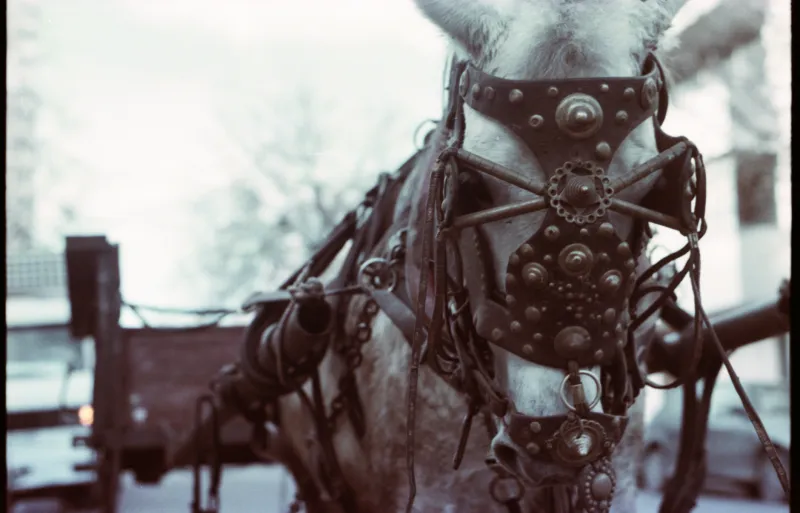
At a provincial saleroom, horse brasses are rarely the star of the show. They turn up in a biscuit tin, a margarine tub or a knotted carrier bag, usually lumped in with stirrups, curry combs and one orphaned spur. The estimate is often £10–£20, and the temptation is to treat the whole bundle as decoration for a shed wall. That is fair enough — but a little reading before the hammer falls can separate a tatty pile of cast metal from a small archive of working harness history.
Start With the Hands, Not the Pattern
A horse brass should feel denser than it looks. Pick one up and let it sit in the palm; old cast brass has a certain heft, even when the piece is small. Very thin, springy plates are more likely to be stamped sheet metal made for the decorative trade. Run a thumb around the edge. Genuine old casts are often slightly uneven, with file marks, softened corners and the odd lump where the metal was cleaned up by hand. A perfectly flat, crisp rim is not automatically modern, but it is worth asking why it has survived a century without a single knock.
Do not rely on colour alone. Brass varies enormously, and a bright piece may simply have been polished last week. A dark piece may have been artificially darkened. The more useful question is where the shine sits.
Where a Working Brass Wears
A harness brass spent its working life moving. It hung from a strap, knocked against leather, rubbed against a horse and collected stable grime. That leaves a pattern. Look for polished high points and darker recesses, especially around the suspension loop and the back of the mount. The areas that touched leather often show a soft, slightly dull shine rather than a mirror finish.
Look also for dings, scratches and small cracks near the loop. These are not flaws to run from; they are often the most honest part of the object. A brass that is uniformly bright on both sides, with no wear at the suspension point and no dirt in the pattern, has probably not spent decades on a horse. It may still be a pleasant thing, but it is not evidence of working life.
Mounts, Loops and Leather
The mount is where a horse brass meets reality. Working brasses were fixed to harness in several ways: a leather loop riveted to the back, a brass loop cast or soldered in place, or a wire fitting. Each has its own wear signature. Leather perishes, rivets corrode and loops get replaced, so a repair is not a disaster. A neat blob of modern solder and a shiny new loop, however, should make you look more closely at the rest of the piece.
In a mixed bundle, check the leather before you tug it. Brittle straps can snap at preview, and you do not want to be the person who explains that to the porter. Look at the grain, the rivet heads and the way the loop sits. Later decorative brasses often have a clean, flat back with a small brooch fitting or a loop attached with uniform solder. Genuine working pieces tend to be more utilitarian and more irregular.
Patterns With a Past — and Patterns With a Press
Horse brasses are rich in motif: horseshoes for luck, crowns, stars, crosses, suns, moons, acorns, oak leaves, initials, estate marks and royal commemorations. Victorian and Edwardian examples are common, and the familiar crowned initials can be a useful starting point. But design alone will not date a brass. It will only tell you what the maker was trying to evoke.
Reproduction catalogues have been thorough. Crowns, horseshoes and royal portraits have all been recast, restruck and reproduced for gift shops and pub walls. A sharp design is not proof of age, and a worn design is not proof of genuineness either — recasts from worn moulds can look soft. Use the pattern as a prompt, not a verdict. Ask instead how the piece was made, how it has worn and how the mount has aged.
The Back Is the Confession
Turn the brass over. The back is often more informative than the front. Old cast pieces may show sprue marks, file marks, pitting, uneven thickness and hand-finished edges. Solder might be crude but functional. Rivet ends might be flattened by hand. Later decorative pieces often have a flatter, cleaner back, sometimes with a uniform lacquer that has sealed in the shine.
A small magnet is a useful pocket tool, not a magic wand. Brass itself is not magnetic, so a strong pull suggests plated steel or a steel fitting. But mounts and pins can be steel on genuine pieces, and a non-magnetic response does not make something old. Do not scratch or file a piece in the saleroom to prove a point. You are a buyer, not a metallurgist.
Genuine, Revival and Reproduction
It helps to think in three loose buckets. First, working harness brasses: worn, repaired, often dirty, with mounts that have done a job. Second, decorative revival pieces: made for ornament in the early to mid-twentieth century, often cleaner and more uniform, but still with some age. Third, modern reproductions: bright, consistent, lacquered and sold by the dozen. The boundaries are blurry, and plenty of pieces sit between them.
For a fifteen-pound bundle, you do not need a museum-grade attribution. You need a reason to bid. A matching pair, an unusual estate initial, a nicely worn face piece or a bundle with honest leather loops can all justify a tenner. What you should not do is pay a premium because one brass has a crown and a seller says it is Victorian. Ask what the back shows. Ask where the wear is. Ask why the loop is so clean.
Bidding Without a Saddle
At preview, handle the bundle if the saleroom allows it. Pick out the pieces with weight, movement and wear. Check for cracks at the loop and rot in the leather. Look for sets or pairs, but do not convince yourself that a tray of common patterns is a retirement fund. Set a limit before the auction starts and treat the bundle as a small education rather than an investment.
When you get them home, resist the urge to attack them with polish. A dry cloth and a soft brush will remove loose dust without stripping the surface. Abrasive polishes can erase the very wear patterns that make a working brass interesting. Display them on a board, a leather strap or a shallow tray, and keep them away from damp. A fifteen-pound bundle will not change your life, but it can put a little rural history in your hand — and that is usually the point.