The Lid Never Lies: Reading Twelve-Pound Biscuit Tins at a UK Saleroom
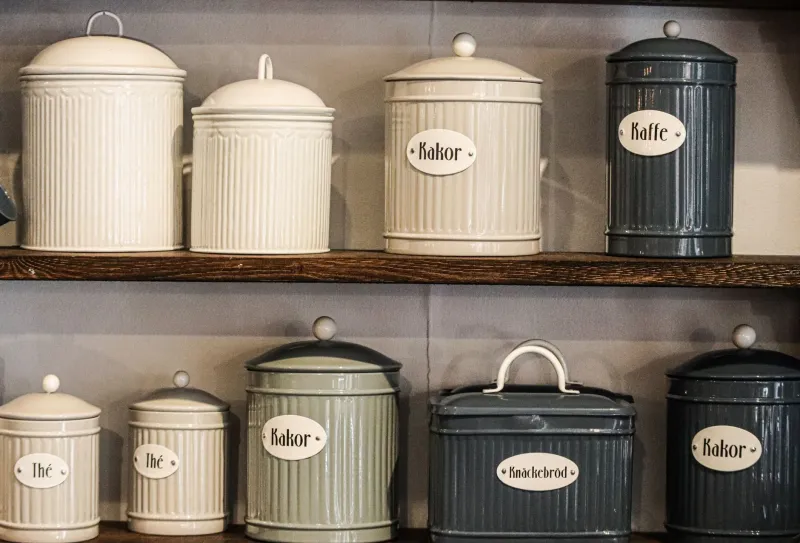
Biscuit tins are the quiet overachievers of the UK saleroom. They sit in mixed lots beside chipped jugs and forgotten brass, often priced at a tenner or a twelve-pound note, and they rarely shout for attention. Yet a good one is a small piece of British design history: lithographed tinplate, royal warrants, factory names and illustrations that once sold custard creams or Christmas shortbread to a nation. A poor one is a rust trap with a lid that no longer sits true. The trick is knowing which is which before you get it home.
Start with the lid, not the picture
The lid is where the romance lives, so it is also where reproductions do their best work. At a preview, tilt the tin towards the light and look across the surface rather than straight at it. Original lithography has a soft, almost chalky depth in the printing. Colours may be faded unevenly, and the image often sits slightly off-register because it was printed in layers. A modern reproduction tends to look flat and crisp, with edges that are almost too clean.
Check the typography closely. Old lettering has quirks: uneven spacing, slightly wonky baselines, a maker's name that has been redrawn rather than scanned. If the lid says something vague like 'Vintage Style Biscuit Tin' or carries a barcode, a website address or a 'Made in China' sticker, you are not looking at a period piece. Genuine tins were advertising, not nostalgia products, so they usually name the firm, the product or the occasion.
The hinge tells the truth
A biscuit tin's hinge is a humble bit of engineering, and it gives away a great deal. Lift the lid gently and let it fall closed from a small height. A healthy hinge will move with a smooth, slightly stiff resistance. A tired one will rattle, catch or let the lid drop with a loose clack. That does not automatically kill the lot, but it changes the price. A tin with a floppy hinge is a display piece that will annoy you every time you open it, or a storage box that will not keep out dust.
Look for solder repairs around the hinge and along the seams. Old repairs are part of an object's life, but clumsy modern blobs of solder are a warning. Run a fingertip along the inside rim, where rust often begins. If the hinge area is crusty with orange bloom, the lid may already be grinding metal against metal.
Rust blooms and the rattle test
Rust on tinplate is rarely neutral. A little surface bloom on the base is common and can usually be stabilised. Rust that has eaten through a seam, perforated the lid or left a tide mark on the printed surface is a different matter. It will not stop spreading just because the tin is on a shelf, and it can transfer to anything stored inside.
Give the tin a gentle shake. A small rattle may be a loose bit of solder or a crumb of dried biscuit, but a heavy rattle suggests internal corrosion or a detached base plate. Turn the tin upside down and tap the bottom lightly with a knuckle. A dull, dead sound can mean the tin is separating at the seams. A clean ring is a better sign.
Smell matters too. Musty, metallic or tobacco odours are hard to remove from tinplate, especially if the tin has been used for storing nails or paraffin. If you plan to put anything edible inside, that matters. If you plan to put it on a shelf, it matters less.
Base marks, makers and royal faces
The base is often the least glamorous part and the most useful. Look for the maker's name, a town, a pattern number or a royal warrant. Huntley & Palmers of Reading, Peek Frean of Bermondsey, Crawfords of Edinburgh, McVitie & Price and W&R Jacob are familiar names to British tin collectors. A royal warrant can help date a design, but it is not a guarantee of age on its own. Reproduction tins have borrowed royal imagery for decades.
Shape helps too. Early twentieth-century tins often have simple rectangular or cylindrical forms with crimped seams. Mid-century tins can be more playful, with handled shapes, house fronts or novelty forms. A tin that feels unusually light and thin may be later or cheaper production. A tin that feels satisfyingly dense with tight seams is more likely to have some age.
The twelve-pound decision
At twelve pounds, you are not buying an investment. You are buying a small object with charm, utility or both. Ask yourself three questions. Is the graphic strong enough to live with? Is the tin structurally sound enough to open and close without drama? And is the rust stable enough that it will not mark the shelf or the contents?
If the answer is yes to all three, it is a display piece. If the lid is dull but sound, the rust is inside and the hinge is loose, it is a three-pound storage box for garden twine, screws or dog biscuits. If it is a modern reproduction with fake distress and a printed barcode, leave it unless the design genuinely appeals and the price reflects it.
A biscuit tin is never just a tin. It is a leftover of British shopkeeping, a bit of lithographed storytelling and a useful box with a past. But the lid, the hinge and the base will tell you more than the picture ever can. Read those first, then decide whether your twelve pounds is buying history or just another thing to store.