Digging Through the Tenner Box: A Hobbyist's Guide to Mixed Auction Lots
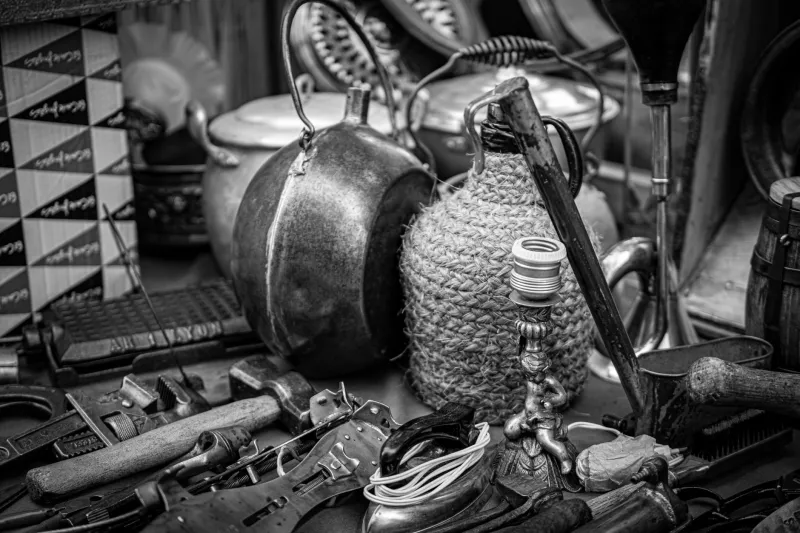
There is a particular kind of hope that arrives on a Thursday evening when the local saleroom uploads its general sale. You scroll past the good furniture, past the boxed diecast cars, and there it is: Lot 214, 'Box of misc. ceramics, ephem., metalware'. One photograph. Slightly out of focus. A tenner says you could be the next owner of somebody else's clutter.
In 2026, online bidding has made the mixed job lot easier than ever to buy and harder than ever to judge. You cannot always lift the box. You cannot always peer inside. But you can learn to read the clues, bid with your head, and enjoy the sorting as much as the win. This is box-lot archaeology, and it is one of the thriftiest joys in the hobby.
First, Read the Room and the Lot Photo
A sparse catalogue entry is not always a bad sign. Sometimes it means the saleroom has not looked closely either. Look at the edges of the photograph. What is the box resting on? Is there a sheet of newspaper underneath, and can you read the date? Are there other lots visible behind it that suggest the sort of house it came from? A box lined with 1970s newspaper is a different prospect from one padded with 1930s tissue.
Read the notes for phrases like 'not checked', 'viewing recommended', 'a/f' or 'qty'. These are not reasons to walk away. They are reasons to ask. If the saleroom allows extra photographs, ask for one of the base of any ceramics and one of the bottom of the box. Ask whether there is jewellery, watches or loose cutlery, because those lots are sometimes split out. A polite email before the sale can save you a wasted trip.
The Weight Test and the Rattle Test
If there is a viewing day, go. Pick the box up. Weight is information. A box that is heavy for its size may hold books, ceramics, metalware or coins. A box that is light may be mostly paper and packaging, which can still be good if the paper is old. Give it a gentle shake and listen. A rattle can mean loose parts and possible damage, but it can also mean small items have worked their way down between layers.
Smell it, too. Damp, tobacco and mothballs are not always deal-breakers, but they tell you what sort of storage the lot has had. Look at the tape. If it has been opened and resealed, somebody has already had a rummage. That is not necessarily bad, but it does mean the obvious treasures may have gone.
Bidding Without Losing Your Head
The hammer price is not the price you pay. A £10 lot with a 20 per cent buyer's premium plus VAT on the premium is closer to £14.40 before you have paid for petrol or a courier. That is still cheap for a weekend's entertainment, but it changes the maths on a £40 box. Set your maximum before the sale and write it down. Do not get drawn into a bidding war over a box of 'misc.' simply because somebody else wants it.
Check the collection window before you bid. A bargain you cannot collect is not a bargain. If you are bidding online, use a proxy bid and then leave it alone. The thrill of the chase is real, but so is the sinking feeling of winning three boxes you have nowhere to put.
The Four-Pile Method
When you get the box home, resist the urge to tip it onto the carpet and start dusting. Work on a table with good light and make four piles: keep, research, sell and recycle.
The keep pile is for things you actually like or can use. A decent mixing bowl, a brass door handle, a length of old ribbon, a book you will read. The research pile is for anything with a mark, a signature, an odd shape or a whiff of age. Do not clean these yet. The sell pile is for duplicates, decent brands and collectables you do not want. Bundle them honestly for a local auction, a car boot sale or an online listing. The recycle pile is for the rest, but check your local rules first. Broken ceramics usually go in general waste, clean textiles can go to charity, and paper can be recycled unless it is genuinely old and interesting.
What Actually Turns Up
Mixed lots are often richest in ephemera. Postcards, receipts, letters, trade catalogues, maps, theatre programmes and school reports turn up in boxes that were described only as 'paperwork'. Small antiques hide in the gaps: thimbles, buttons, penknives, brass weights, copper measures, silver-plated spoons, costume jewellery and horology parts. Do not dismiss chipped china. A rare pattern or a maker's mark can make a damaged plate worth researching, and spares are always wanted by somebody.
Books can be surprisingly good. Ex-library volumes, old maps, colour plate books and local histories are all worth a look. Toys turn up too, from diecast cars to lead soldiers, though lead deserves careful handling. Textiles are often overlooked: lace, linen, embroidery and old sewing notions can be lovely and are usually cheap because nobody wants to iron them.
A Weekend of Finds
The real pleasure is not the value. It is the afternoon you spend looking things up, comparing marks, and learning something you did not know on Friday. Photograph the research pile before you clean it. Keep a 'maybe' box for things you cannot decide on. Set yourself a rule: if it has not been kept, researched or sold within three months, it goes.
The tenner box is a small gamble with a long tail. You might find a £50 print, a £5 brooch or nothing but a useful storage box. You will almost certainly find a story. And if the boot is already full of other people's clutter, at least you are doing it with your eyes open.