Rivets, Rosy Glow and the Re-Tinning Tell-Tale: Sizing Up a £20 Copper Pan
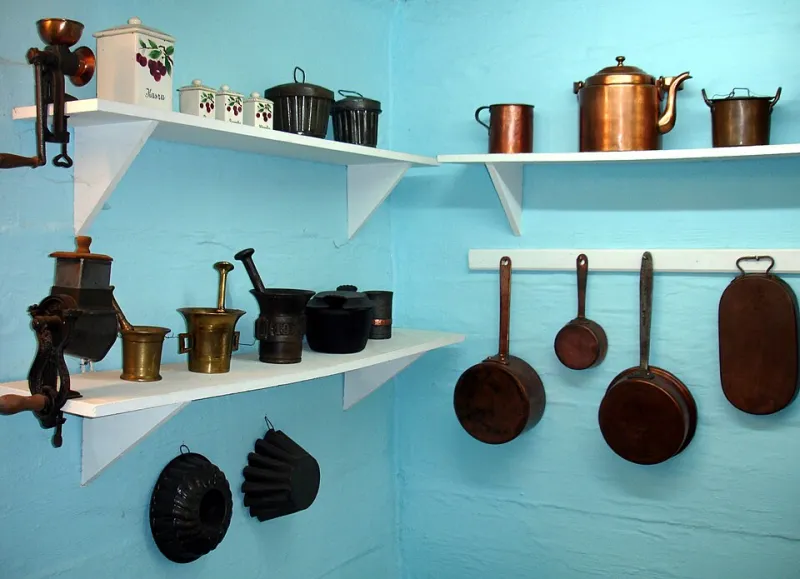
Photo: Silar, CC BY-SA 4.0, via Wikimedia Commons
Walk into any provincial saleroom on a Friday and you will find one: a copper pan, often two or three of them, stacked in a washing-up bowl or slumped across a trestle table under a label that says simply 'kitchenware'. The copper is the colour of a sunset and half the room has already decided it is beautiful. That is precisely the moment to slow down.
Copper is a working metal, and nearly every pan that survives to 2026 has been worked hard. The rosy glow is not a certificate of health. It is a coat of paint on a house you have not yet inspected.
First, understand what the shine is hiding
A traditional copper pan is lined, because naked copper reacts with food. The old lining was tin, applied hot and wiped across the interior in a silvery sheet. Tin wears. It wears faster than you think — a decade of daily porridge and scrambled eggs can take it back to bare metal in the base and up one side.
At preview, tilt the pan towards the window. Look for the copper showing through in a soft pink patch at the centre of the base and around the lower walls. Patches are normal. Large bare continents across the cooking surface are a different matter. Re-tinning is specialist work now, and in the UK it is readily quoted at thirty to sixty pounds for a single pan — meaning the lining can cost three times what you paid for the lot.
Also sniff it. A pan that smells metallic and sour has probably been used unlined, or left damp. Copper that has gone verdigris-green inside has been storing something it should not have.
Rivets are the pan's handwriting
Now turn the pan upside down and count the rivets on the handle strap. On hand-raised pans the handle is often held by two, three or four rivets passing through the copper wall, domed over on the inside. The domes should be tight, even and matching. Look for shadows: if a rivet sits proud, or the copper around it is dished, the joint has been pulled at.
Mismatched rivets are common and not automatically fatal — a handle re-fixed in the 1950s with brass rivets on a Victorian pan is a nice piece of history, and often a strong pan. What you are really watching for is solder. Lead solder on a rivet head or along a seam is a soft repair on a hot surface, and it will not enjoy a hob. Silver solder is better work but still a repair. Ask yourself how much of the pan is original metal and how much is confession.
A good sign is visible hammering on the exterior: shallow, overlapping planishing marks, finer towards the rim. That suggests a raised pan rather than a pressed one, and raised pans take repairs far better.
The handle knows more than the seller
Cast-iron handles with a rough blackened surface point one way in time; rolled steel strap handles, riveted and painted, point another. Look at the strap itself. Where does the metal thin? A pan carried by one person for forty years will show a strap polished at the top and bitten thin at the bend where the fingers sat.
Then look at the fixings at the far end. Wooden handles, added in the mid-twentieth century to keep the heat off the palm, are often held with a screw thread that has stripped. A wobbly handle is not the end of the world, but it tells you the pan has been in service, not on a dresser.
Weigh it, tap it, and trust the ring
Pick the pan up. Thick-gauge copper feels heavier than it looks and settles into the hand with a dull heft. Thin copper feels like a biscuit tin and will flex under a thumb — press gently near the rim and see.
Now tap the base with a fingernail, away from dents. A clean ring that dies away quickly is what you want. A flat thud, or a patch that sounds different from its neighbours, suggests a soft-soldered repair or a split folded shut and hidden under polish. Check the base for warp with a straight edge; a rocking pan is a pan that will scorch on one side and never quite behave.
Maker's stamps, and the geography of a modest pan
Most stamps are worn to a ghost. Get the light low and raking rather than overhead — cupped in the shadow of the handle and on the base, often a tiny oval, a set of initials, sometimes a city. 'Made in England' lettering generally points to the twentieth century rather than the nineteenth, since country-of-origin marking became standard practice in the export trade from the 1890s onwards. A pan stamped for a Welsh or Birmingham workshop with a dovetailed seam is a pleasing find in a tenner box; a completely anonymous pan with heavy, honest construction is still perfectly welcome in a working kitchen.
The twenty-pound verdict
Ask yourself one question before the hammer: am I buying a cook or a looker?
- As a user: rivets tight, no solder, handle solid, base flat, lining worn but not vanished, ideally a stamp. Twenty pounds is a bargain, even counting a re-tin later.
- As a looker: a beautiful hammered exterior and a worn lining is fine if it hangs above a range and never meets a fish.
- Walk away: loose rivets with solder, a rocking base, thick verdigris inside, or a handle strap cracked through at the rivet line.
Copper does not lie for long. Give a pan three minutes at preview — the tilt, the count, the tap — and it will tell you exactly how it has spent its life. Then spend your twenty pounds with a clear conscience, and a tin of polish you may not actually need.